


theGATE Festival
Never before has art been so close to science as it is now in the electronic age
Format
Exhibition
Installation
Performance
Data
18-22 may, 2026
Ubicació
HLRS | Stuttgart
Never before has art been so close to science as it is now in the electronic age. Researchers at supercomputing centres, universities and companies alike have been collaborating with artists through programs like S+T+ARTS and reaping the rewards for many years now. This festival exhibition pulls back the curtains on this unique mode of collaboration and the art-driven innovation it contributes to.
At the same time, art finds itself increasingly estranged from its traditional media, spaces and institutions. Computing technologies do not merely extend existing practices; they reconfigure how art relates to life and what art can be.
There is a new conception of humanity and nature
– and the changes are coming fast
…We must be prepared for the transformations that lie ahead,
…We must systematically map and research current practices and trajectories,
…We must examine what artists are proposing as forms of cultural experimentation,
…We must track what scientists and engineers are advancing technically and epistemically,
…We must assess which artistic practices hold social relevance and civic potential,
…We must engage with philosophical inquiry about the ethical and conceptual ramifications
PERFORMANCE
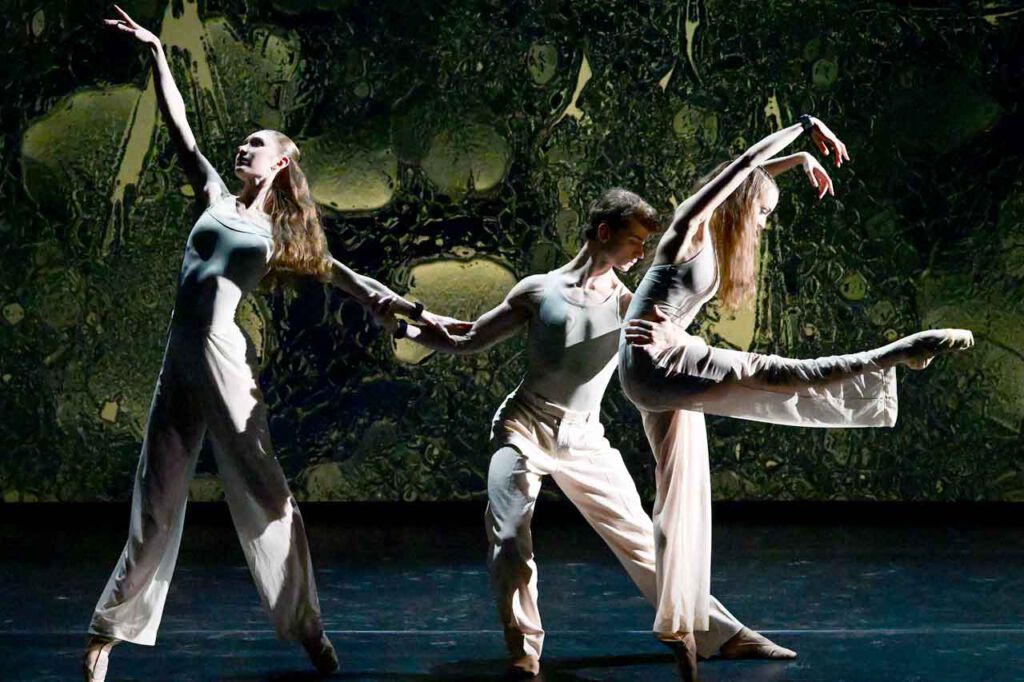
DANCE LAB
The Stuttgart Ballet’s Dance Lab Choreographed by Carlos StrasserDance Lab
Normally, music moves us, but what happens when we move the music? In this piece by Carlos Strasser, movement becomes audible and music becomes visible. The familiar rules are questioned.
The space turns into a resonating body, and the dancers move within it like strings inside a piano. The dancers of Stuttgart Ballet shape the evening as equal musicians, creating an intimate and up close experience.
Dancers: Edoardo Russo, Anya Donaghy, Doğa Taskaya
Vita Carlos Strasser
Carlos Strasser was born in Tübingen, Germany, and grew up in Rottenburg am Neckar. He began his ballet training in 2013 at the Ballet School Ciechoradzki in his hometown. One year later he went to Stuttgart to continue his education at the John Cranko School from which he graduated in 2024.
From 2011 to 2014 he played the young Tarzan in the musical Tarzan, in 2022 he was a dancer in Sanoja Cuerda’s Performance Cuerdas, simple medida (Coreogego). The young man with many talents created his first Solo in 2022 and he not only choreographed but also composed the music. In 2023 Fantasie Impromptu for students of the John Cranko School premiered. One year later he presented Zwischen Wind und Asphalt at Noverre: Young Choreorgaphers and created not only the choreography, the music and the Poem but also played the piano.
In 2023 he was the protagonist of the film documentation “Crankos Traum - Die Talentschmiede des Stuttgarter Balletts“.
During the 2024/25 and 2025/26 seasons Carlos Strasser is an apprentice with the Stuttgart Ballet.
Exhibited Projects
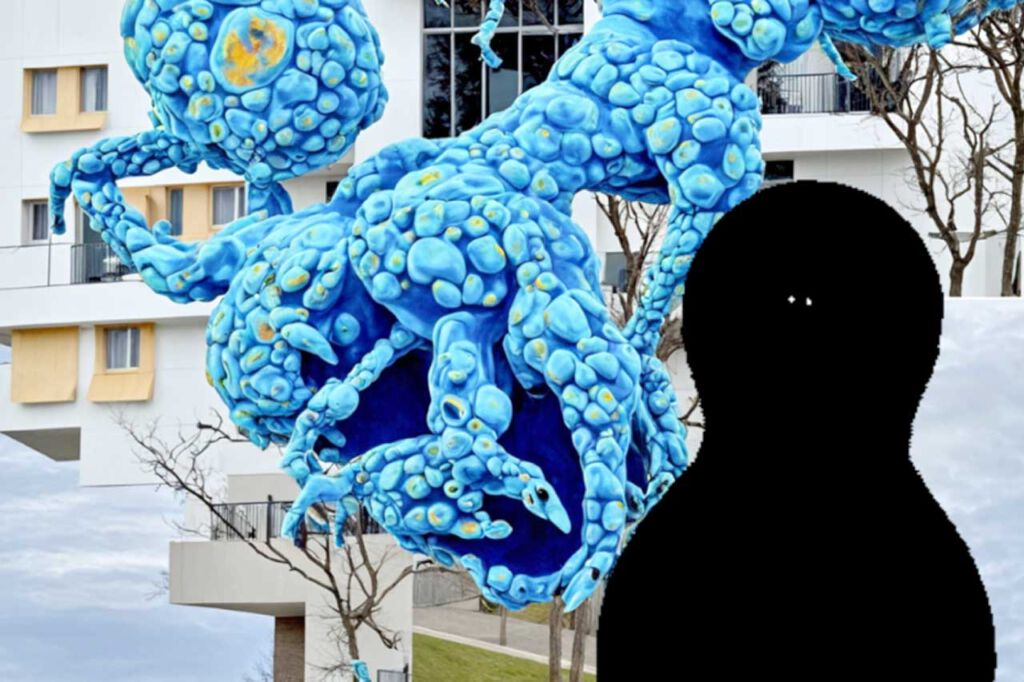
VR-Terroir
by Bernat CuníThe project
Bernat Cuní’s residency focuses on challenging the rampant standardization of digital culture by creating hyperlocal avatars that absorb and are shaped by their environments, carrying their “lived experiences” like terroir. The objective is to visualize how context—including data, textures, and local inputs—can alter a digital identity. The work involves creating synthetic 3D materials from image inputs and extracting material qualities from HLRS’s scientific simulation visualizations. The artist is prototyping a behavioral pipeline where a 3D mesh is affected by different material properties based on proximity, moving towards designing a minimum-viable-avatar mesh with a defined movement system.
The artist
Bernat Cuní is an artist who explores the digitization of objects and spaces by blending code, crafts, and robotics, focusing on emerging technologies through a post-capitalist lens. Although he began as an industrial designer in 1999, he later shifted toward research-based design focused on people, citing disillusionment with the consumerist nature of producing physical goods.
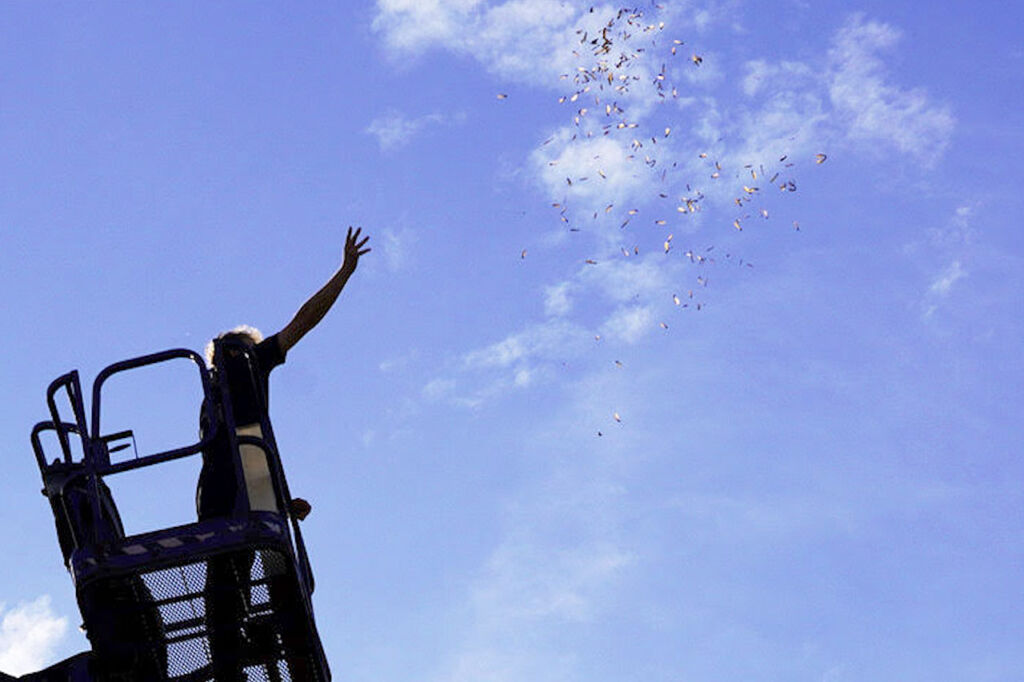
Looping
by Oliver KruseThe project
Oliver Kruse is undertaking the looping project, which involves translating the aerodynamic morphology of the maple tree’s flying fruit into a structurally and aerodynamically refined large-scale flying sculpture. The physical artwork is planned to be an aluminum aircraft construction, measuring 6 meters in length, analogous to the size of an airplane wing. The artistic research utilizes collaboration with HLRS for aerodynamic simulation and parametric design exploration to digitally forecast the object’s flight behavior. The project involves prototyping and making three-dimensional models in various materials, as well as developing video and drawing work, as well as a “flight day” to test at least 20 objects, examining how long they can be kept airborne and testing remote-controlled flight.
The artist
Oliver Kruse is a visual artist whose multidisciplinary work is inspired by architecture, geometries, and spatial environments, encompassing both constructed and natural settings. His recent practice, which includes large-scale urban sculpture and site-specific digitally generated projects, explores the intersections of art, nature, and architecture, challenging the traditional division between sculpture and architecture. A key element of his work is the critical investigation of virtual constructions, where existing forms are digitally reconstructed and assembled in unexpected ways, resulting in systems of interwoven, non-hierarchic geometries. His project, looping, is a collaboration involving artistic research, aerodynamic engineering, and aircraft construction, inspired by the effortless flight of the maple tree’s flying fruits. The goal is to translate the morphology of the maple fruit into a structurally, aerodynamically, and morphologically mature large-scale flying sculpture, ultimately realized in aluminum aircraft construction in a size corresponding to an actual airplane wing (6 meters in length).
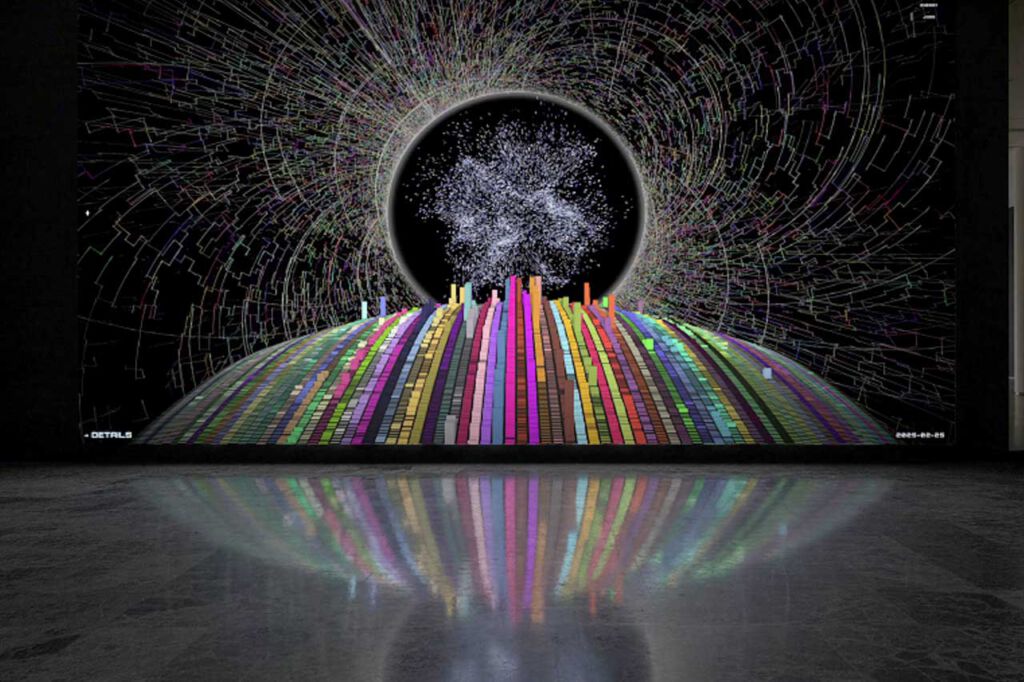
HPC Data Symphonies
by Dr. Kirell BenziThe project
Dr. Kirell Benzi is developing HPC DATA SYMPHONIES, a public-facing installation designed to make the invisible inner workings of the HLRS high-performance computing (HPC) center visible and understandable to non-specialist audiences. The artwork transforms live log data from HLRS’s HAWK supercomputer into an evolving digital landscape, visualized as a heightfield where extruded cubes correspond to compute activity by scientific field (e.g., climate modeling, AI, materials science). The project’s goal is to move beyond conventional visualization by developing a composite visual language where visual parameters (like height, shape, texture, color, and rhythm) are directly tied to real metrics such as compute time and energy consumption, ensuring the resulting landscape is expressive and data-driven.
The artist
Dr. Kirell Benzi is an award-winning data artist and AI researcher whose work explores how information can be transformed into artistic and immersive experiences. Holding a Ph.D. in Data Science from the École Polytechnique Fédérale de Lausanne (EPFL), he investigates the intersection of art, artificial intelligence, and visualization to reveal the hidden structures shaping our world.
His practice treats data as a living material: something that can be sculpted, animated, and experienced. Through large-scale installations, artistic data visualizations, and interactive environments, Benzi transforms complex datasets into narratives that engage both intellect and emotion.
Bridging scientific inquiry and artistic expression, his work proposes a new language for perceiving the systems that define contemporary life. He has collaborated with museums, research institutions, and corporate partners worldwide, and his data art has been presented at international exhibitions and conferences, earning recognition for its distinctive approach to visualizing complexity.
Merging Visions
by Merve ŞahinThe project
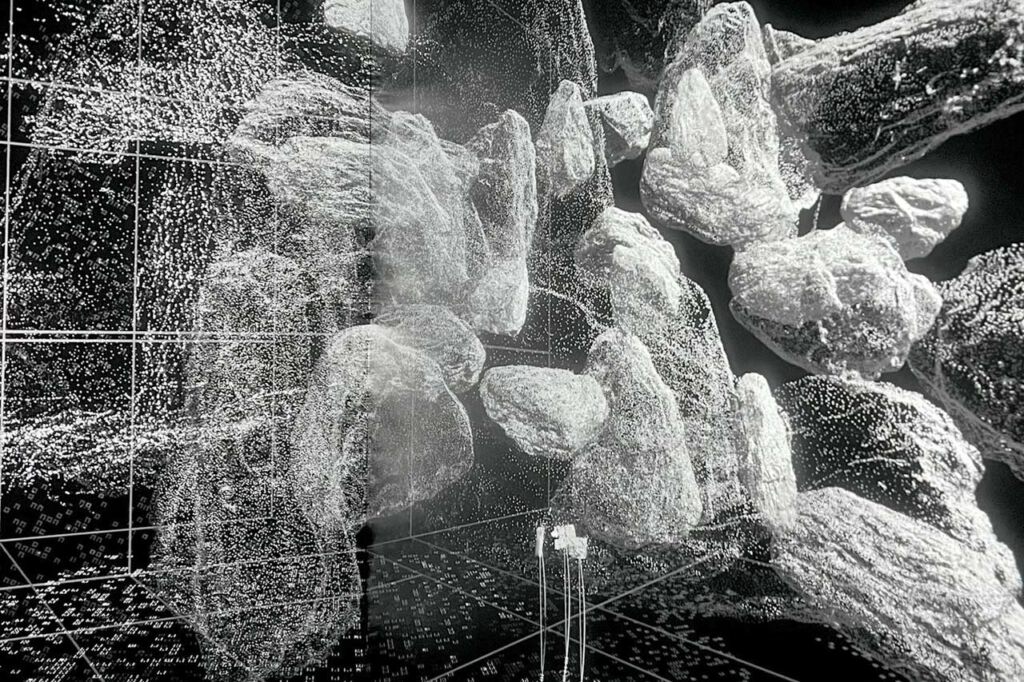
Merve Şahin’s Merging Visions project addresses the challenge of communicating the transformation of the Salzburg Festival site by reimagining digital twins through artistic and immersive storytelling. The core concept is “Expanded Immersive Twins,” extending digital twins to incorporate cultural, ecological, and historical layers of the heritage-protected urban environment. The project involves a mixed reality installation where 3D models and scans of the site and its archives are transformed into speculative digital landscapes. The technical output includes developing tangible user interfaces (physical models augmented with digital layers via AR sensors) that enable users to physically interact with and navigate the virtual content, translating scientific datasets (like user movement and geological structures) into interactive visualizations.
The artist
Merve Şahin is a Vienna-based architect and researcher who specializes in using architectural and digital representation techniques as a medium for visual storytelling. Her work aims to uncover the socio-political and historic layers embedded in public spaces by creating immersive drawings and animations that reveal both tangible and intangible layers of the built environment. Her mediums include parametric 3D-modeling, vectoral mappings, digital renderings, and data visualizations, which she uses to explore the digital turn’s impact on public spaces through speculative, engaging digital formats. Her residency project, Merging Visions, focuses on transforming urban digital twins into exploratory digital installations that can be experienced by audiences using XR technologies (Augmented Reality and Virtual Reality). By applying this approach to the Salzburg Festival use case, she aims to overlay physical spaces with electronic data to bring the rich historical, social, and cultural layers of urban environments to life.
The Perfect Perfect Dirty
by Johanna BrucknerThe project
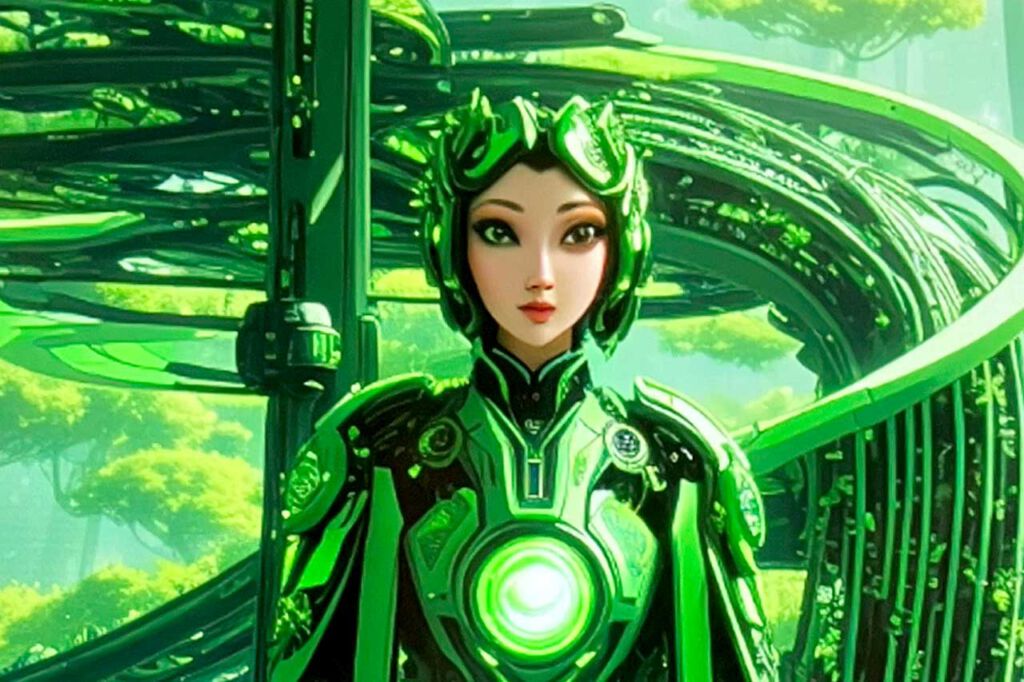
Johanna Bruckner is pursuing research at the intersection of AI, queer theory, ecology, and posthumanism, focusing on the interface between the body, affect, and technology from the perspective of quantum physics. The project addresses the deconstructive and corporeal nature of interfaces in algorithmic systems, employing a critical perspective rooted in queer-feminist and post-digital conceptions of the body. As a major outcome, the artist is conceiving of art objects based on research from the Institute of Quantum Materials at TU Dresden, combining processes like 3D-printing, silicone, glass craftsmanship, and new materials derived from quantum research. The work also includes developing a multi-channel video installation incorporating new software based on Artificial Intelligence and methods from Large Action Modelling related to incalculable mechanisms in medicine and finance. Furthermore, the artist is prototyping choreographic scores for the development of digital avatars based on AI research.
The artist
An artist born in 1984 in Vienna, Austria, who studied fine arts, cultural studies, and social anthropology across multiple international institutions. Her artistic output—including film installations, performative scripts, and writings—explores the tensions at the core of socio-political issues, specifically focusing on biopolitics and queerness within the framework of late capitalism. She also uses collaborative performative design as an organizing principle for social practice and reflection. Her project, The Perfect Perfect Dirty, aims to closely investigate Artificial Intelligence technologies and their potential to complexify and diversify, primarily by challenging the prevailing myth that digital systems are clean, reliable, and free of contamination. Bruckner seeks to modify the parameters through which information is weaponized against queer and other intersectional minorities, instead establishing “dirtiness” as an ontology for queer AI to develop a more-than-human future coexistence. The research will manifest as a science-fiction based scenario featuring a new video installation and related objects that activate an immersive space, showcasing fictional characters navigating co-contaminated embodiment with AI-based interfaces.
There Is No Such Thing as a Fish
by Carolyn KirschnerThe project
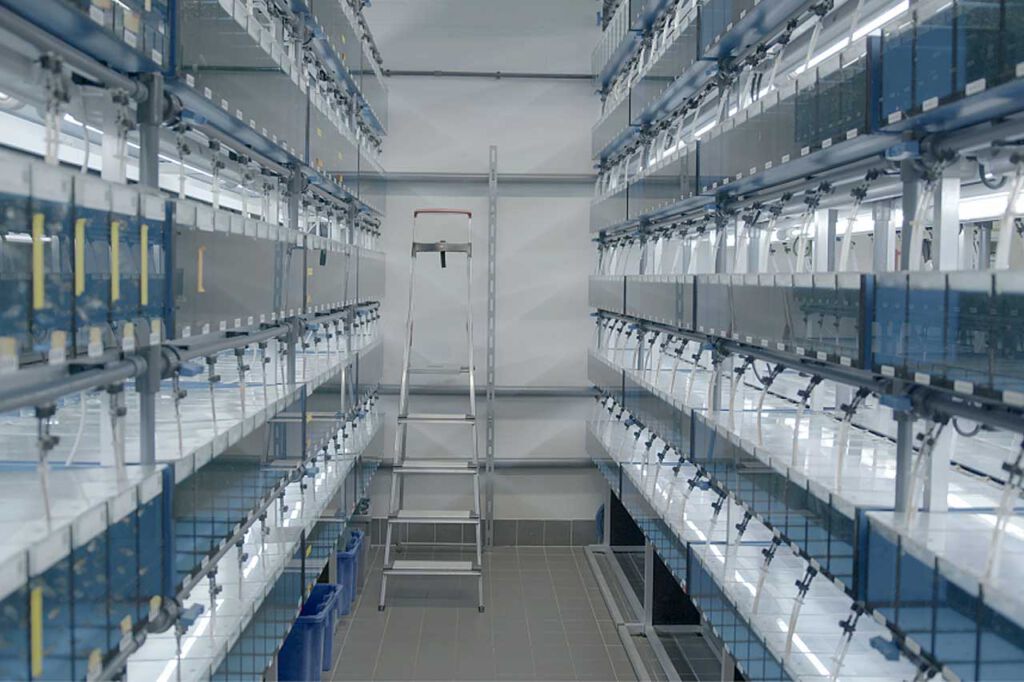
Carolyn Kirschner’s residency project, There Is No Such Thing as a Fish, is an artistic investigation into the zebrafish as a model organism in scientific research, examining its socio-cultural significance and speculating on possible interspecies futures. What does it mean to use the body of one species as a model or stand-in for another? What are the implications of efforts to bring zebrafish’s regenerative abilities into the human body? Are we becoming part fish? Or maybe we always have been?
Working with Physics of Life researchers from TUD Dresden University of Technology, the project engages with a search for the foundational principles underpinning life, and the interplay of living systems with computational processes. One of the project outcomes is a short film, which documents a range of interconnected cultural, material, and ecological landscapes where human and zebrafish worlds collide – from a petri dish in the lab, to pet shops, server farms, rivers and rice paddies in India. The project also leverages advanced computational methods to produce a speculative anatomical model, based on digital reconstructions of the last common ancestor between humans and zebrafish 425 million years ago.
The artist
Carolyn Kirschner is a designer and researcher with a background in architecture. Her work explores the growing entanglements of ecologies and machines in the context of the climate crisis, working with scientific tools, simulation engines, digital fabrication, and film to produce fragments from alternate or expanded worlds. She is a Lecturer at Goldsmiths, University of London, and previously taught at Parsons School of Design in New York.
Her S+T+ARTS residency project There Is No Such Thing as a Fish was developed in collaboration with scientists from the Physics of Life Cluster of Excellence at TUD Dresden University of Technology. Through film and creative applications of advanced computational methods, the project explores interspecies dimensions of biomedical research and the role zebrafish play in the search for the underlying physical laws and mathematical equations that govern life.
AFRICAN INTELLIGENCE
by Hadassa NgambaThe project
Hadassa Ngamba will undertake an artist-in-residence program at the HLRS facilities in the week leading up to theGATE. We are excited to see what this collaboration will produce and are looking forward to finding that out during the exhibition along with our visitors.
The artist
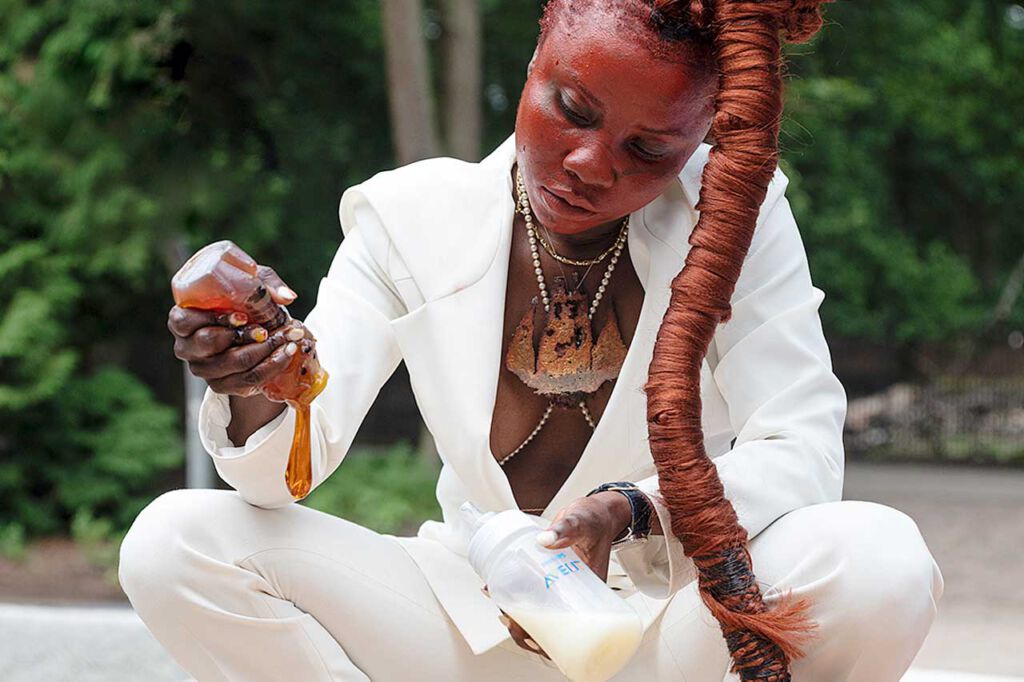
Hadassa Ngamba is a visual artist with a postgraduate degree from HISK (Higher Institute for Fine Arts), Ghent, Belgium. Her practice brings art, history, science and ancestral knowledge systems into dialogue. Working across painting, sculpture, photography, performance and digital media, she investigates questions of power, memory and materiality. Drawing on her background in criminology, she examines historical and contemporary networks of power with analytical precision, with particular attention to maps, trade routes and extractive systems. Her current research places two forms of AI — African Intelligence and Artificial Intelligence — in dialogue, creating a framework through which to reconsider technology, knowledge, materiality and sovereignty. In her recent works, Congolese minerals are transformed into pigments, allowing matter itself to carry history, tension and renewal. Her work is held in public and private collections, including S.M.A.K., the Banque Nationale de Belgique, IKOB, Morgan Stanley Bank, the EKARD Collection and Zeno X Gallery.
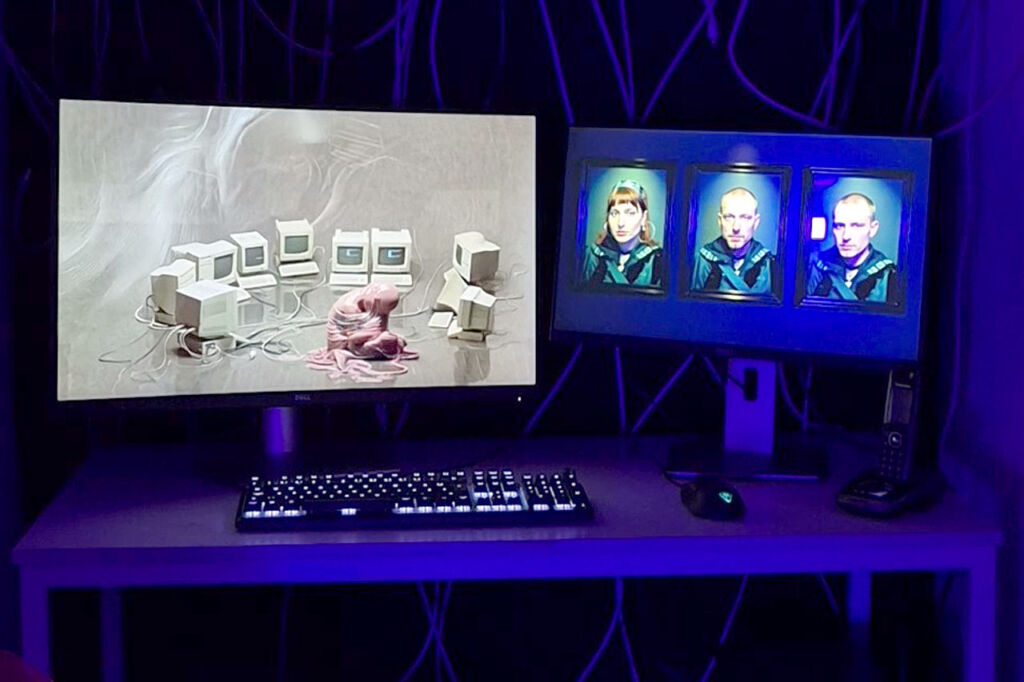
Merz Akademie
MIRROR MACHINE
by Sofija Cvetkovic and Leni Aigner, students of Merz Akademie, University of Applied Art, Design, and Media, StuttgartInteractive installation, 2026. This work explores the fragile relationship between human identity and algorithmic systems. What appears to reflect us begins to reshape us. Through an immersive installation of AI-generated video, sound and interaction, the project stages a psychological space where humans and technologies dissolve into one another. By inviting visitors to submit their own image, the work turns participation into exposure. MIRROR MACHINE questions authorship, dependency and control; does the algorithm mirror us, or do we now mirror the algorithm without realizing it?
THE CRITICAL ENGINEERING MANIFESTO
by Danja Vasiliev, professor for Emerging Media at Merz Akademie, University of Applied Art, Design, and Media, Stuttgart and co-authorsPrint, 2011. The Critical Engineering Manifesto is a call to treat engineering as a site of political and ethical responsibility - arguing that every technology encodes ideology, and that the Critical Engineer's task is not merely to build but to study, expose, and subvert the systems that shape human agency.
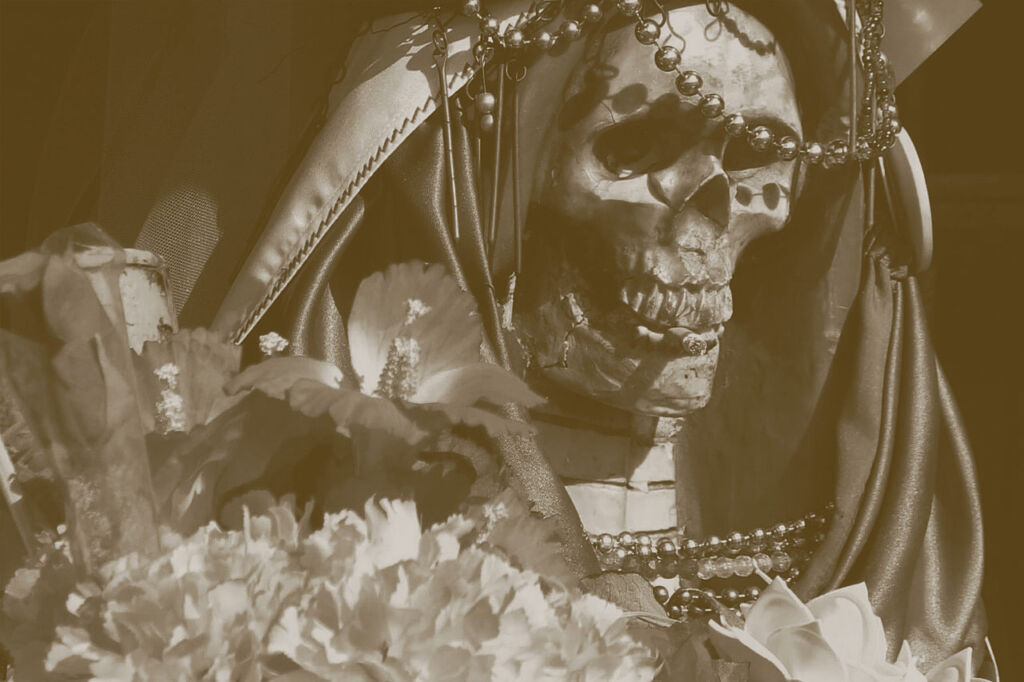
Only available on Monday and Tuesday
SANTA MUERTE
by MAURICIO VALDÉS SAN EMETERIOThe project
A few blocks separate two cathedrals in the historic center of Mexico City: Saint Michael Archangel, its atrium filling each Sunday with a brass band and the smell of copal; and the Lebanese Maronite Cathedral, where the liturgy is sung in Aramaic, the language of Christ's own prayers. A few streets further, in the working-class neighborhood of Tepito, devotees gather for the Rosario Viviente a la Santa Muerte — the Living Rosary — hands clasped before a skeletal figure draped in the colors of the Virgin.
This piece inhabits that triangle.
Santa Muerte is built from field recordings made during a residency at Casa Vecina, Fundación Carlos Slim, in 2015, in close collaboration with artist Miguel Mesa, whose recordings are woven throughout the work. The dramatic arc is cinematic: a Catholic Mass erupts into the noise of the city; a procession moves through the streets; the Aramaic chant of the Maronite rite folds into the crowd's devotion for a saint the official Church refuses to recognize. The space of the city — its chaos, its echo, its layers of faith — becomes the compositional material.
Santa Muerte is the outcast of Mexican religiosity and, in that sense, a near-perfect metaphor for acousmatic music itself. Both belong to the same lineage — one to Catholicism, the other to the Western concert tradition — and both are treated by their parent institutions as aberrant, undisciplined, too street-level to be taken seriously. Santa Muerte draws together pre-Hispanic iconography, Catholic ritual, and a fierce sense of collective belonging into a coherent cosmology that needs no institutional approval to function. Acousmatic music does something analogous: it composes with sound in space and time, extends Cage's re-definition of music to its logical conclusion, and finds most of its audience among the misfits who never felt at home in the concert hall to begin with.
The piece is structured around space as a narrative voice. Sound does not merely illustrate — it locates. The listener is placed inside a moving geography: inside the nave, on the street corner, in the middle of the rosary. At theGATE Festival, the work is diffused through an experimental speaker system directed toward the architecture of the room, using the surfaces of HLRS's space as an acoustic instrument. The piece does not reproduce the city; it lets the city pass through the room.
The artist
Media artist/composer and Head of R&D at Heka Art and Science Lab—expert in immersive audio technologies and computer-assisted sound creation.
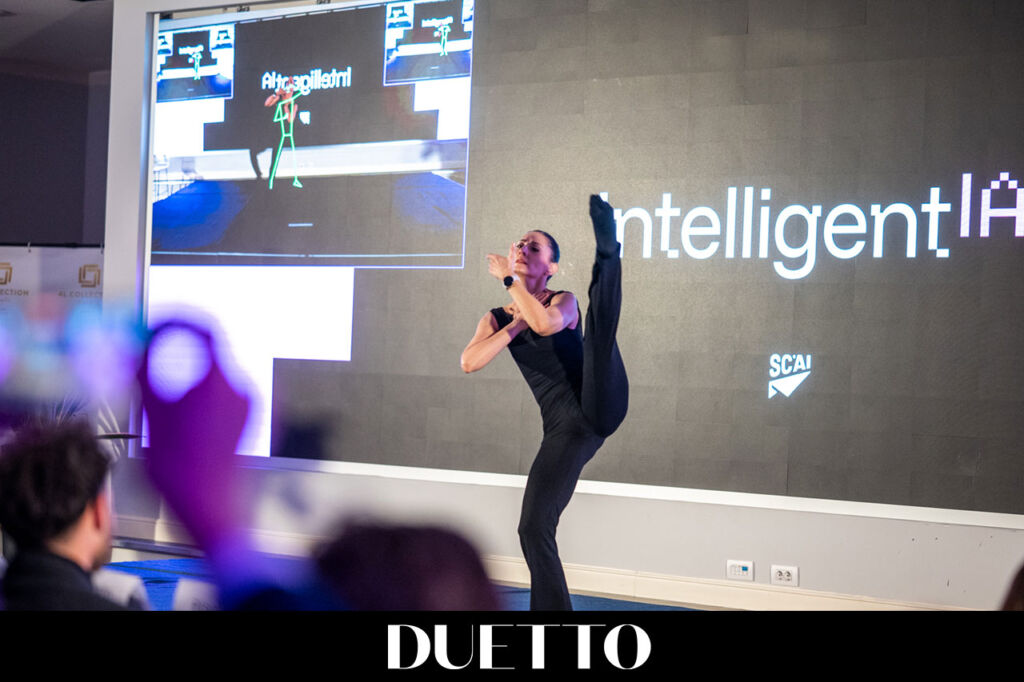
DUETTO AT theGATE FESTIVAL 2026
by ALESSANDRO LONDEI & DENISE LANZIERIThe project
As part of theGATE Festival 2026, Duetto, a research project by Sony CSL – Rome, will be presented as an exploration of the relationship between artificial intelligence and human movement. The project resonates strongly with the context of theGATE, a festival dedicated to the convergence of science, technology, arts and society, and to the new forms of cultural experimentation emerging at their intersections.
Duetto approaches the body as a form of language. In this perspective, postures become elementary units, while movement unfolds as a complex and expressive sequence, much like meaning emerging through words and sentences. But the project does more than describe motion: it seeks to recognize relations, possibilities and transformations within gesture, opening a space in which AI can not only interpret movement, but also respond to it in creative ways.
Dance provides the ideal ground for this exploration. It is a field in which technique, intention, memory, listening, variation and invention coexist in constant tension, making visible the richness and complexity of embodied expression. In this context, Duetto does not imagine artificial intelligence as a passive tool, nor as a system meant to replace performers or choreographers. Instead, it proposes AI as a creative interlocutor: a responsive presence capable of engaging in a real-time exchange with the moving body and suggesting new possibilities in return.
At the heart of Duetto lies a genuinely human-in-the-loop vision. The human performer does not simply initiate the process but continuously shapes and redirects what the system understands and proposes. In this sense, the project opens a wider reflection on creativity itself, asking how AI might expand human expressive capacity rather than substitute it. What emerges is not a model of replacement, but one of dialogue: a way of thinking about intelligence, invention and embodiment as shared, dynamic processes.
For its presentation at theGATE Festival, Duetto will also be accompanied by an interactive installation inviting the public to engage directly with a dancing AI. Visitors will not only observe the project, but enter a live encounter with it, experiencing movement as a space of exchange between human presence and machine interpretation.
In this way, Duetto speaks directly to the spirit of the festival. By bringing together artistic research, scientific inquiry and technological experimentation, it offers an example of how collaborations across disciplines can generate new questions, new forms, and new ways of imagining the relationship between humans and intelligent systems. As theGATE Festival continues to explore future boundaries, Duetto contributes to this reflection by approaching the body not as something to be reduced to data, but as a living source of knowledge, creativity and transformation.
The artists
Duetto is a project led by Alessandro Londei and Denise Lanzieri, researchers at Sony CSL – Rome, with Milena Di Canio leading its cultural and communication dimension; it is mentored by Vittorio Loreto, Director at Sony CSL – Rome.
EVENING
- S+T+ARTS
ECHO Project STARTS - ART & Music
Performance LED Wall - Merz Akademie – University of Applied Arts, Design and Media
AI Installation
EVENING
- S+T+ARTS
ECHO Project STARTS - ART & Music
Performance LED Wall - Merz Akademie – University of Applied Arts, Design and Media
AI Installation - SONY LAB
AI Installation - State Theater Stuttgart
AI + Theater
EVENING
- S+T ARTS
ECHO Project STARTS - ART & Music
Performance LED Wall - Merz Akademie – University of Applied Arts, Design and Media
AI Installation - SONY LAB
AI Installation - Fundació Èpica La Fura dels Baus
Javier Iglesias Gracia - State Theater Stuttgart
AI + Theater
EVENING
- S+T+ARTS
ECHO Project STARTS - ART & Music
Performance LED Wall - Merz Akademie – University of Applied Arts, Design and Media
AI Installation - SONY LAB
AI Installation - S+T+ARTS
Hungry Ecocities, Musae und Resilience - Artist Hadassa Ngamba
Collaboration: HLRS + Living Atlas + AI (African Intelligence)
MORNING
- S+T ARTS
ECHO Project STARTS - ART & Music
Performance LED Wall - Merz Akademie – University of Applied Arts, Design and Media
AI Installation - SONY LAB
AI Installation